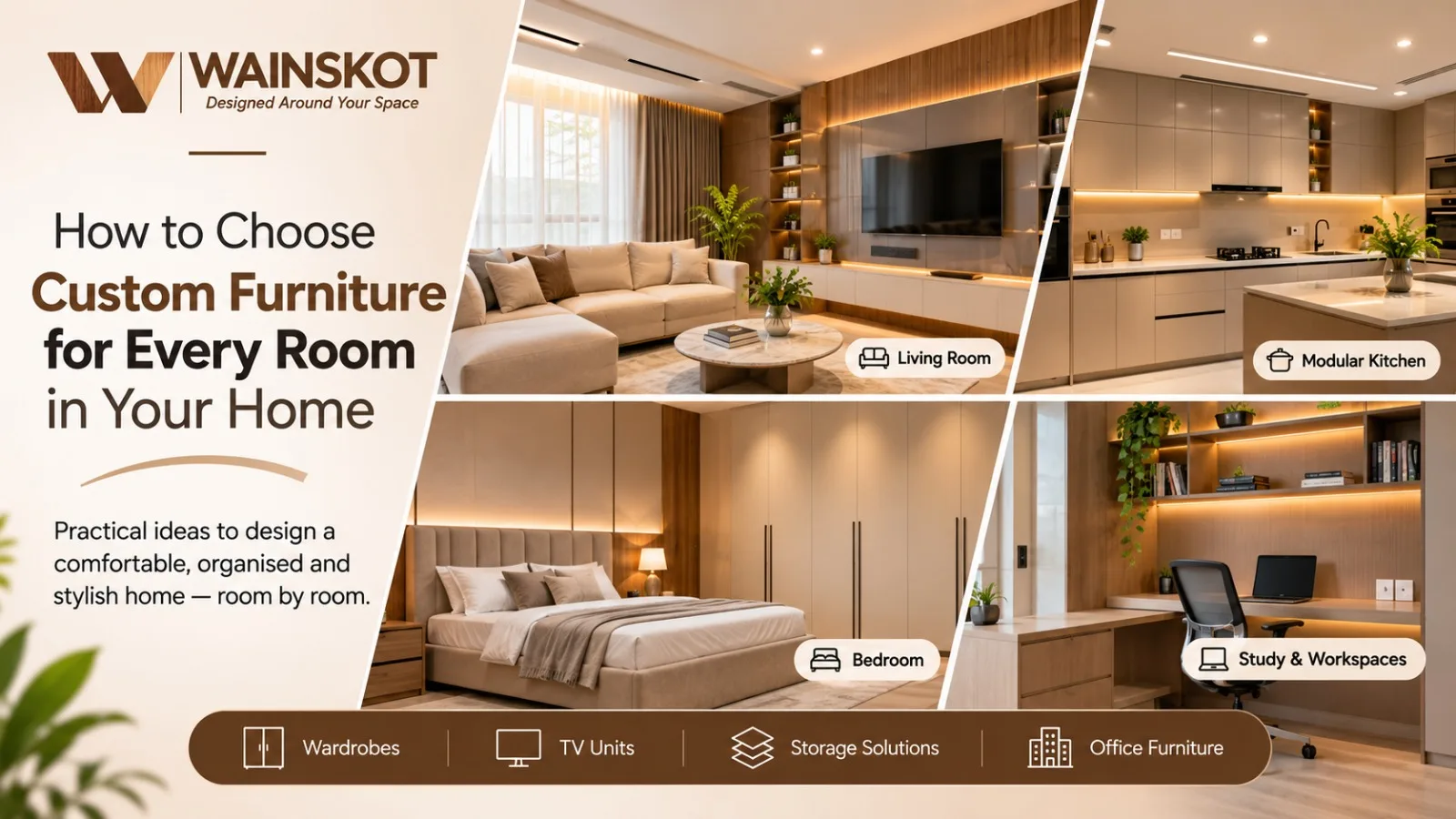
This is where custom furniture makes a difference.
Unlike standard furniture, custom-made furniture is designed around your available space, personal preferences and practical requirements. It gives you greater flexibility in choosing dimensions, materials, colours, finishes and functionality.
Whether you are furnishing a new home, renovating an existing space or looking for better storage solutions, choosing the right furniture requires careful planning.
In this guide, WAINSKOT explains how to choose the perfect custom furniture for your home and what to consider before starting your furniture project.
1. Understand Your Space and Furniture Requirements
Before selecting any furniture, start by understanding your available space.
A beautiful furniture design may look attractive in a photograph, but it may not work well in your home if its dimensions are unsuitable. Furniture should complement the room without making it feel crowded or restricting movement.
Consider the following factors:
- Measure the length, width and height of the available space.
- Identify doors, windows, electrical points and other fixed elements.
- Consider how people move around the room.
- Identify unused corners or areas that could serve a practical purpose.
- Decide how much storage or seating you actually need.
For example, a compact bedroom may benefit from a customised wardrobe with sliding doors, while a spacious living room may accommodate a larger sofa with additional seating.
Understanding your space helps you choose custom furniture that fits naturally into your home.
2. Identify Your Lifestyle and Daily Needs
Furniture should not only look attractive; it should support your everyday lifestyle.
Think about how you use each room and what you expect from your furniture.
For example:
- Families may need additional storage and durable furniture.
- People working from home may require a customised study unit or workstation.
- Small households may prefer multifunctional furniture.
- People who frequently entertain guests may need comfortable and flexible seating arrangements.
If you have a compact home, consider furniture that combines multiple functions. A bed with integrated storage, a wall-mounted study desk or a customised TV unit with concealed storage can help maximise available space.
The right custom furniture design balances appearance with everyday practicality.
3. Choose the Right Furniture Design and Style
Your furniture should complement the overall interior design of your home.
Before finalising a design, consider the colours, textures, lighting and architectural style of your rooms.
Some popular furniture design styles include:
Modern furniture: Clean lines, simple shapes and minimal decoration.
Contemporary furniture: A combination of current design trends, practical layouts and modern finishes.
Minimalist furniture: Simple designs that prioritise functionality and avoid unnecessary details.
Traditional furniture: Detailed craftsmanship, classic patterns and timeless finishes.
Scandinavian-inspired furniture: Light colours, natural textures and functional designs.
You can collect inspiration from interior design websites, magazines, Pinterest or existing furniture references.
However, remember that a design should be adapted to your actual room dimensions and requirements rather than copied without considering your space.
4. Select the Right Materials for Your Custom Furniture
Material selection is one of the most important decisions when planning custom-made furniture.
Different materials offer different characteristics in terms of appearance, durability, maintenance and cost.
Here are some commonly used furniture materials:
Plywood
Plywood is manufactured by bonding multiple layers of wood veneer. It is widely used in furniture applications because of its structural strength and versatility. Its suitability depends on the grade, thickness and quality selected.
MDF (Medium-Density Fibreboard)
MDF is an engineered wood product with a smooth and uniform surface. It is commonly used for decorative panels, cabinet components and painted furniture finishes. Its moisture resistance depends on the specific grade.
Particle Board
Particle board is made from wood particles bonded together. It is often used in budget-friendly furniture applications, although its strength and moisture resistance vary according to quality.
Solid Wood
Solid wood offers a natural appearance and distinctive grain patterns. It can be suitable for furniture requiring a traditional or premium finish, depending on the wood species and construction.
When selecting materials, consider the intended use, expected exposure to moisture, maintenance requirements and overall budget.
Discuss material specifications with your furniture provider before approving the final design.
5. Focus on Functionality and Storage
One of the biggest advantages of custom furniture is the ability to create storage according to your specific requirements.
Instead of adjusting your belongings to fit standard furniture, you can plan furniture around the items you actually need to store.
Consider these ideas:
- Custom wardrobes: Plan hanging sections, shelves, drawers and accessories according to your clothing requirements.
- TV units: Include space for entertainment devices, cables and decorative items.
- Modular kitchens: Organise cabinets, drawers and storage sections according to your cooking habits.
- Study units: Create dedicated space for laptops, books, documents and office accessories.
- Custom beds: Consider under-bed storage where additional space is required.
- Office furniture: Plan workstations and storage according to daily work activities.
A functional furniture layout makes your home easier to organise and more comfortable to use.
6. Prioritise Comfort and Ergonomics
Furniture should look good, but comfort should never be overlooked.
For frequently used furniture, pay attention to dimensions, proportions and ergonomic requirements.
For sofas, consider seat depth, back support, cushion firmness and seating height.
For beds, ensure the dimensions are suitable for the room and the people using them.
For study tables and workstations, consider desk height, legroom, chair compatibility and screen placement.
For kitchen furniture, think about convenient access to frequently used items and comfortable working heights.
Small design decisions can significantly improve the everyday experience of using your furniture.
7. Set a Realistic Budget Before Starting
Custom furniture can be planned across different budgets depending on the materials, dimensions, design complexity, finishes and hardware selected.
Before starting your project, establish a realistic budget.
Your furniture budget should account for:
- Material selection and quality.
- Furniture dimensions and quantity.
- Surface finishes and decorative elements.
- Hardware, hinges and fittings.
- Design complexity.
- Transportation and installation, where applicable.
It is also useful to discuss the scope of work and inclusions before confirming the project.
Rather than selecting furniture based only on its initial price, consider its intended use, construction quality, maintenance requirements and long-term suitability.
A well-planned furniture project can help you make better use of your available budget.
8. Pay Attention to Finishes and Small Details
The final appearance of custom furniture depends on more than its overall design.
Finishes, handles, edges, textures and hardware contribute to the complete look and functionality.
Some popular furniture finishes include:
- Matte finishes for a subtle and contemporary appearance.
- Glossy finishes for a smooth and reflective look.
- Natural wood finishes for warmth and texture.
- Textured laminates for added visual interest.
- Veneer finishes for a natural wood appearance.
Also consider the quality of hinges, drawer channels, handles and other fittings.
These smaller components influence how smoothly your furniture operates and how well it performs over time.
9. Choose a Furniture Partner Who Understands Your Requirements
Choosing the right furniture provider is just as important as selecting the design.
A reliable furniture partner should understand your requirements, discuss practical design options and communicate clearly throughout the process.
Before finalising your decision, consider:
- Whether they understand your space and functional requirements.
- Whether they can explain available materials and finishes.
- Whether they provide clear design discussions and measurements.
- Whether the project scope and expected deliverables are communicated.
- Whether they can share genuine examples of completed work.
- Whether they explain timelines and installation arrangements.
Clear communication helps minimise misunderstandings and makes the furniture planning experience more organised.
10. Think About Long-Term Value, Not Just Current Trends
Furniture is an important part of your home, so your decisions should consider long-term usability.
Trends can change, but comfortable, functional and well-planned furniture remains useful.
Choose designs that complement your lifestyle and can adapt to your changing needs.
Neutral colours, practical storage, durable materials and timeless shapes can help your furniture remain relevant for years.
You can always introduce changing design trends through smaller decorative elements such as cushions, rugs, lighting and accessories.
How WAINSKOT Helps You Plan Custom Furniture Around Your Space
At WAINSKOT, we believe that furniture should be designed around the space it serves and the people who use it.
Every home has different dimensions, preferences and functional requirements. That is why a personalised approach to furniture planning can make a meaningful difference.
Whether you are considering a custom sofa, bed, wardrobe, TV unit, study unit, modular kitchen or office furniture, the focus should remain on creating solutions that suit your requirements.
Our approach centres on understanding your ideas, available space, design preferences and functional needs before moving towards the furniture planning and execution process.
From discussing design possibilities to considering materials, finishes and practical details, WAINSKOT aims to make customised furniture planning more convenient.
Designed Around Your Space.
If you are planning to upgrade your home or create furniture for a new space, explore the possibilities with WAINSKOT.
Frequently Asked Questions (FAQs)
1. What is custom furniture?
Custom furniture is furniture designed and created according to specific requirements, including room dimensions, design preferences, materials, colours and functionality.
2. Is custom furniture better than ready-made furniture?
Custom furniture offers greater flexibility in dimensions, design and functionality. Ready-made furniture may be more convenient for standard requirements, while custom furniture can be more suitable when you need furniture designed around a particular space.
3. Is custom furniture suitable for small homes?
Yes. Custom furniture can be particularly useful in smaller homes because it allows you to utilise available space efficiently through tailored dimensions, integrated storage and multifunctional designs.
4. Which material is best for custom furniture?
The best material depends on the furniture type, intended use, budget and environmental conditions. Plywood, MDF, particle board and solid wood are commonly used options, each with different characteristics.
5. How do I start planning custom furniture for my home?
Start by identifying your requirements, measuring the available space, collecting design references and setting a budget. Then discuss materials, finishes, dimensions and project expectations with a suitable furniture provider.
6. Can custom furniture match my existing home interiors?
Yes. Custom furniture can be designed to complement existing colours, finishes, room layouts and interior styles.
7. Does WAINSKOT offer custom furniture solutions?
WAINSKOT focuses on personalised furniture solutions, including sofas, beds, wardrobes, TV units, study units, modular kitchens and office furniture. Customers can discuss their space, preferences and furniture requirements with the team.
Final Thoughts
Choosing the perfect custom furniture is about finding the right balance between design, comfort, functionality, materials and budget.
Instead of selecting furniture simply because it looks attractive, consider how it will fit into your space and support your everyday lifestyle.
With thoughtful planning and the right furniture partner, you can create spaces that feel more organised, comfortable and personal.
WAINSKOT – Designed Around Your Space.
Explore customised furniture possibilities at www.wainskot.com and start planning furniture that fits your home and your lifestyle.